Space Food Helmet
RESEARCH
ZERO GRAVITY FLIGHT WITH THE MIT MEDIA LAB
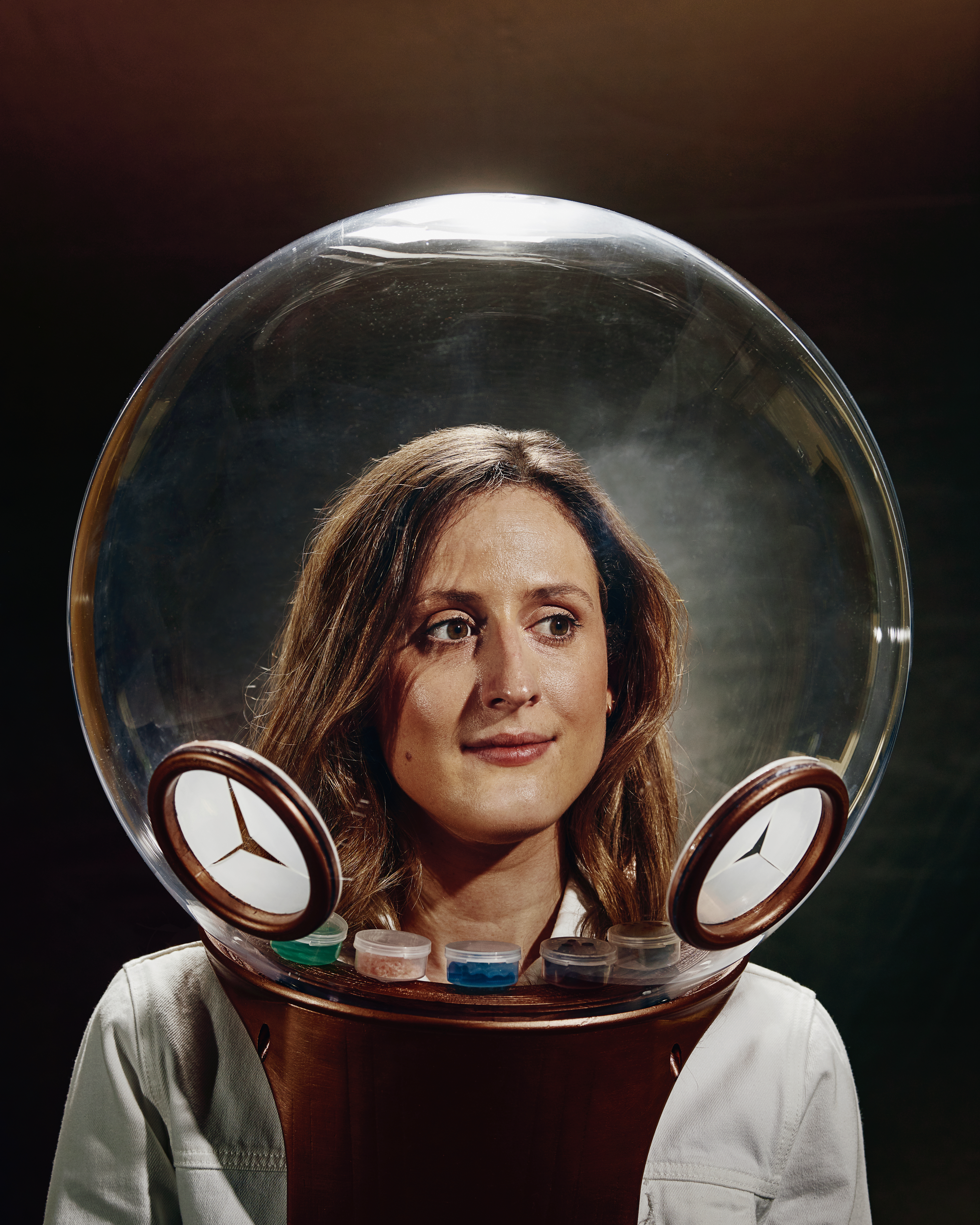
PHOTO: TONY LUONG
What does it feel like to float in zero gravity? How does food taste and smell when you’re weightless? Could floating upside down flip my own assumptions about this distant environment?
I wanted to capture the personal and sensory experience of being untethered. I chose to tell this story through food, a medium that naturally bridges art and science, culture and technology.
I created a tasting menu for a zero-gravity flight, designed to be experienced inside a custom Space Food Helmet. I was fully immersed in a personal universe, where each bite, smell, and sound floated around me.
I wanted to capture the personal and sensory experience of being untethered. I chose to tell this story through food, a medium that naturally bridges art and science, culture and technology.
I created a tasting menu for a zero-gravity flight, designed to be experienced inside a custom Space Food Helmet. I was fully immersed in a personal universe, where each bite, smell, and sound floated around me.
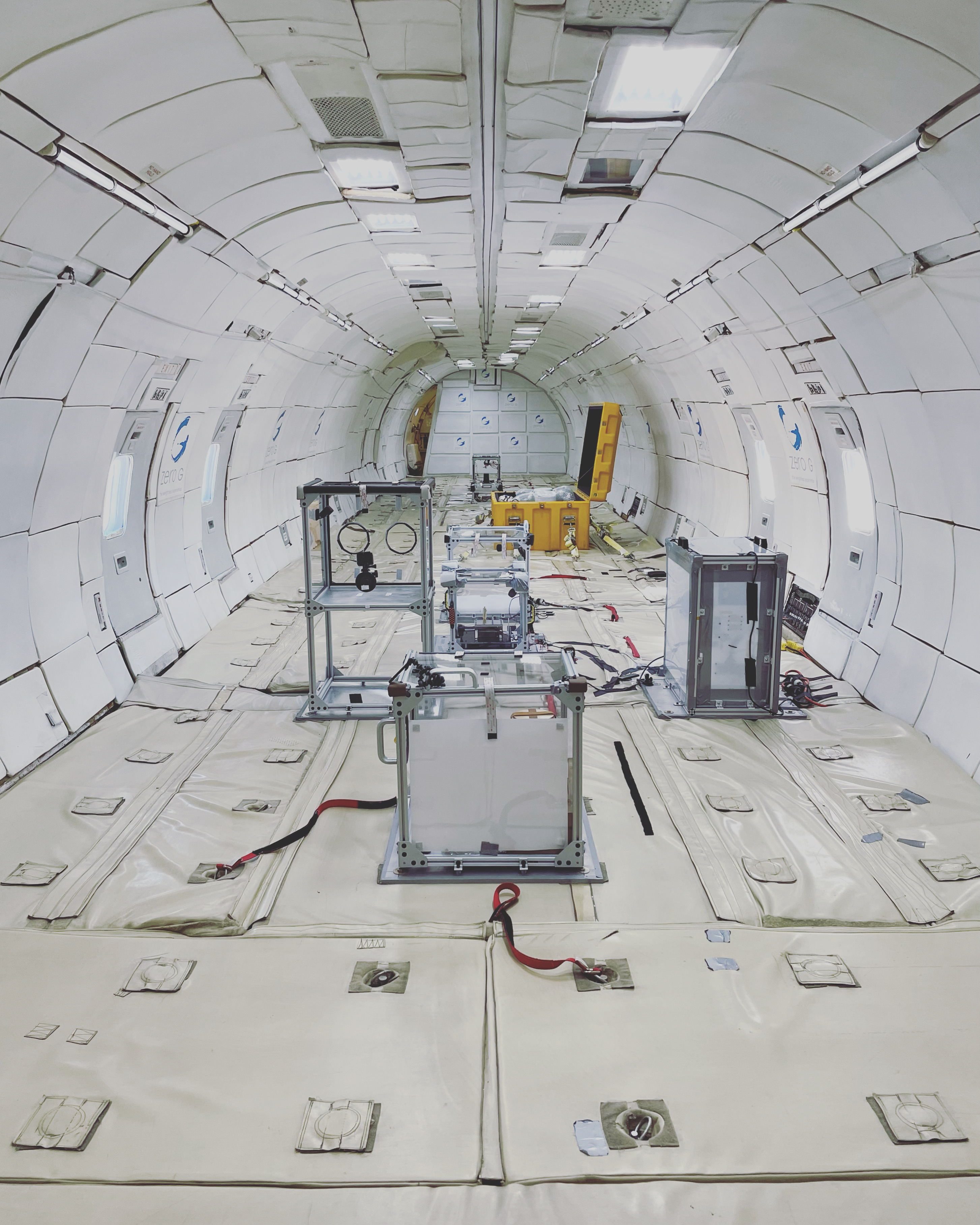
Parabolic flights simulate weightlessness through a parabolic maneuver that causes free-fall, allowing researchers to perform microgravity experiments on Earth.
The Space Food Helmet began as a practical solution for safety and evolved into an interactive experience. Gloveboxes are commonly used to contain experiments on parabolic research flights and on the ISS. They’re sealed containers with built-in gloves, so you can reach in and work with things without opening the box.Instead of a rigid box, I designed a personal “glovebox” that fits over my head, allowing me to insert my hands through the front, while nothing can escape.
The Space Food Helmet began as a practical solution for safety and evolved into an interactive experience. Gloveboxes are commonly used to contain experiments on parabolic research flights and on the ISS. They’re sealed containers with built-in gloves, so you can reach in and work with things without opening the box.Instead of a rigid box, I designed a personal “glovebox” that fits over my head, allowing me to insert my hands through the front, while nothing can escape.
Supported by: MIT Space Exploration Initiative
Special thanks:
ZERO G
MIT Media Lab
Biniam Kebede
Peter Dilworth
Press:
WIRED | Algae Caviar, Anyone? What We’ll Eat on the Journey to Mars
WIRED Japan | Filling the Void
MIT The Tech | What’s it like to design a meal that floats?